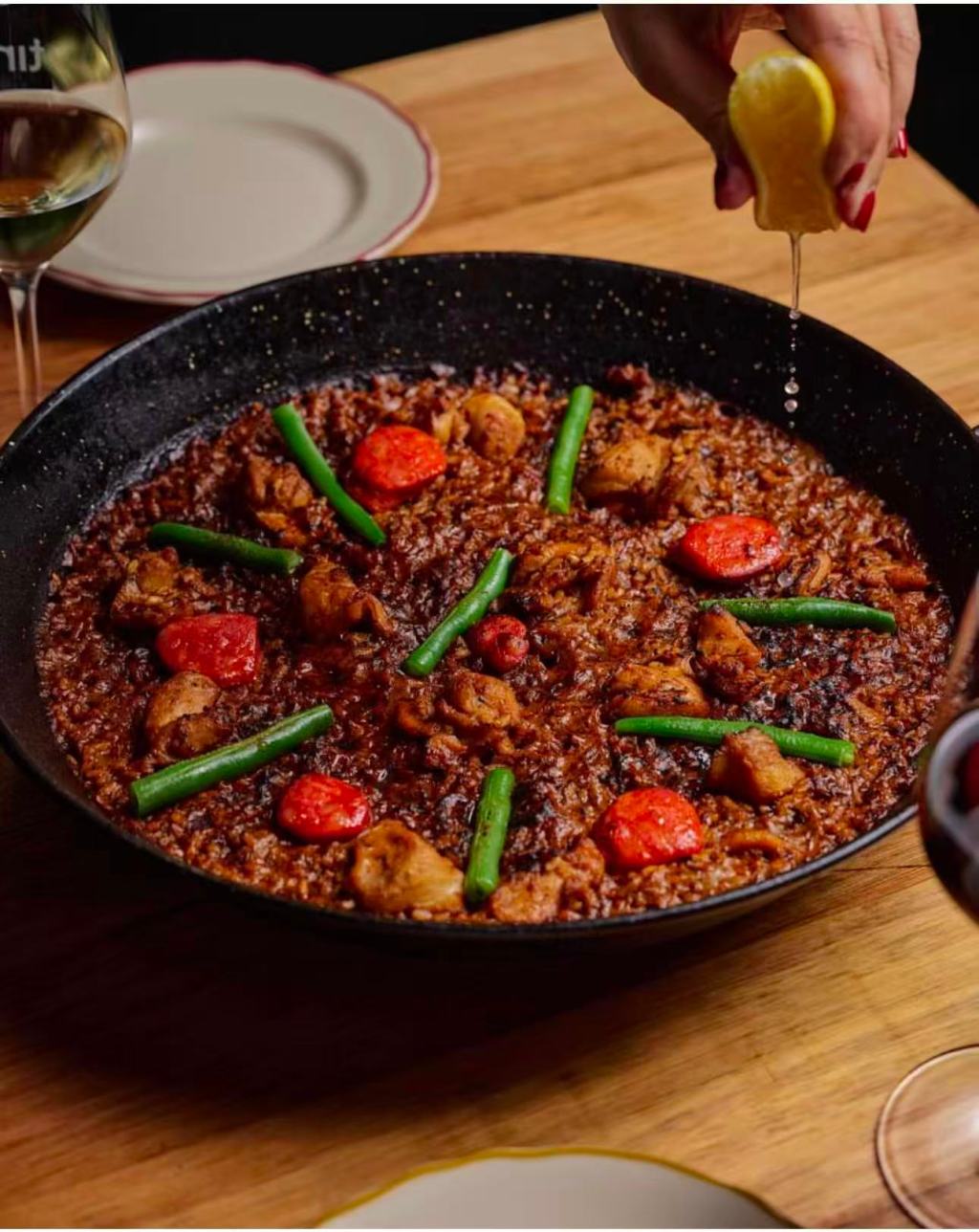
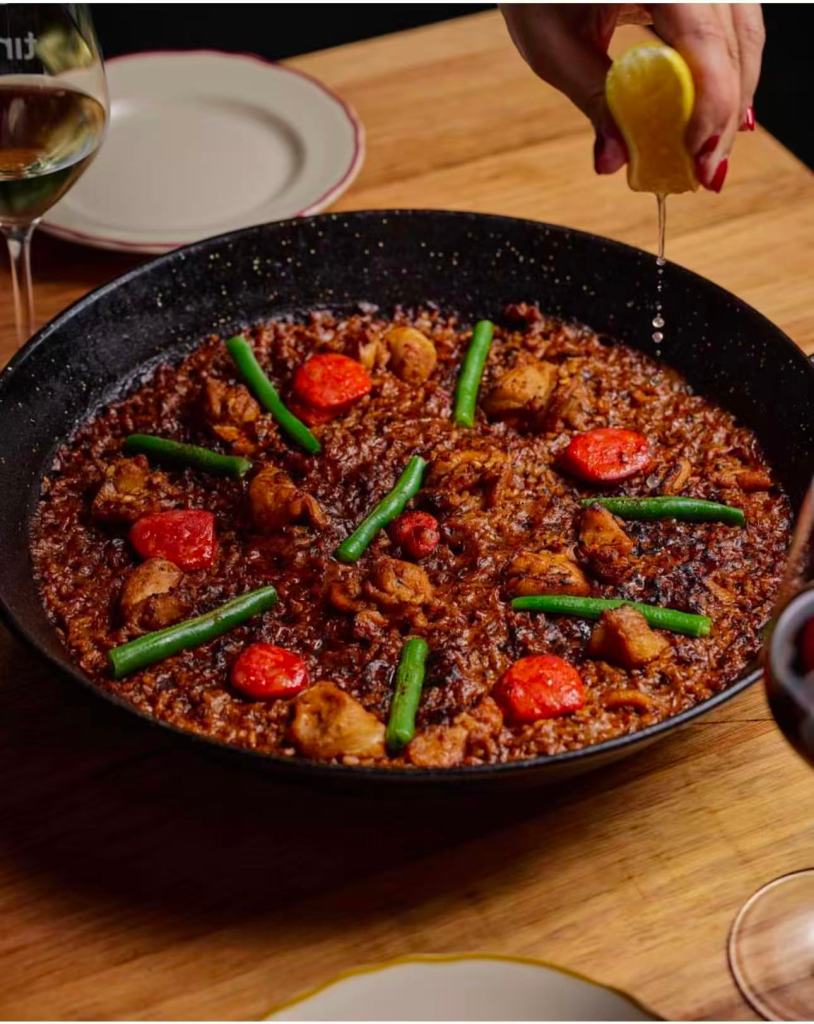
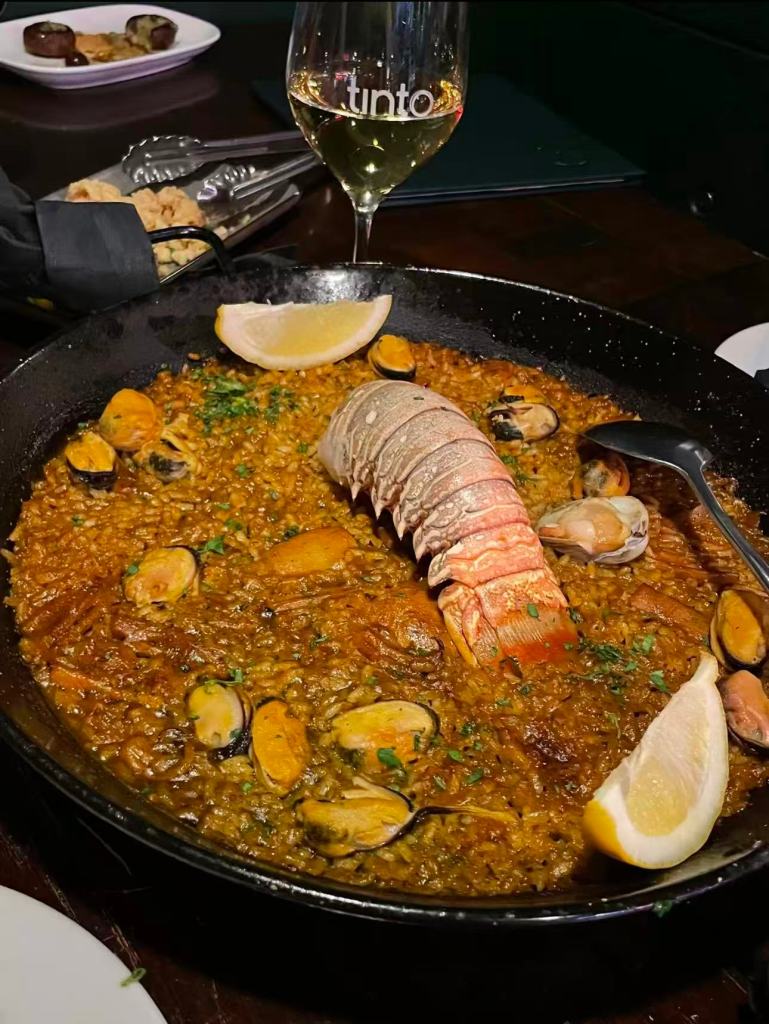
Paella is one of Spain’s most iconic regional dish, and I first had it properly at Tinto which is a Spanish restaurant in Melbourne. The dish was served in a wide, shallow bign pan, with golden rice coloured by saffron and topped with seafood. The presentation immediately felt inviting and social, designed to be shared rather than eaten alone. The rice looked slightly crispy at the edges, while the aroma of garlic and olive oil made it feel warm and comforting.
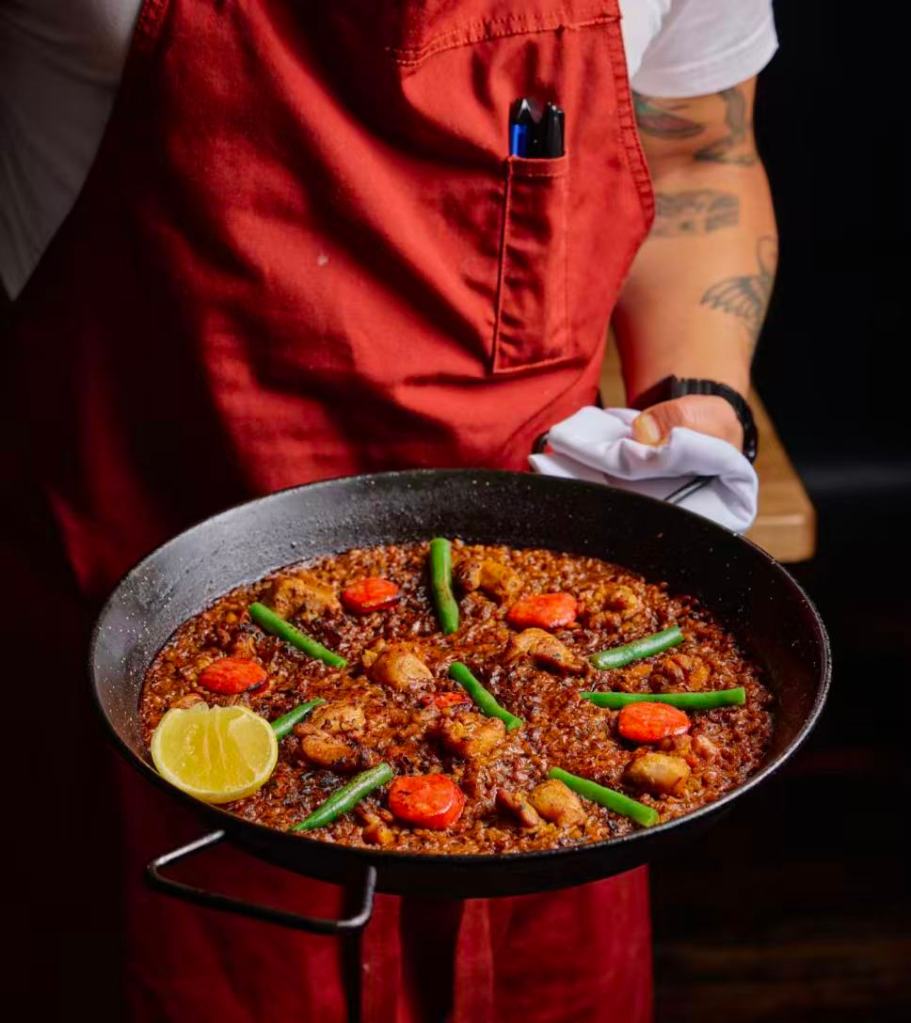
Paella originally comes from Valencia, on Spain’s eastern coast. In the past, it was a rural dish cooked by farmers using local ingredients such as rice, vegetables, and rabbit. It was often eaten outdoors with family and friends, making it not only a meal but also a social tradition. This gives paella strong regional and cultural significance, as it reflects both the local environment and the communal lifestyle of the region.
However, outside Valencia, the dish has changed significantly. At Tinto, the paella I saw was a seafood version, which is now more common internationally than the original recipe. It was served in a modern spain restaurant, surrounded by conversation, wine, and music. This experience made me realise that while the ingredients and setting may change, paella still carries a sense of Spanish identity. Eating it in Melbourne felt like participating in a global food culture, where regional traditions continue to evolve while remaining meaningful.
 Eating Europe in Melbourne